Higher Education Capacity Development Program in Lebanon
Funding Partner: USAID/Lebanon/Educational Development Center
Principal Investigator: Rabieh Razzouk
Co-Principal Investigator: Jeffrey Ayala Milligan, Ph.D.
Project Outline
Challenge
Despite the high levels of tertiary education in Lebanon, the supply of highly skilled workers is not keeping up with employer demand. To increase their productivity and competitiveness, Lebanese employers need educated graduates with mastery in targeted job readiness skills. This requires that Lebanese higher education institutions (HEIs) improve their capacity to effectively train new labor market entrants.
To meet this need, EDC implemented USAID’s five-year Higher Education Capacity Development (HECD) program. HECD supported Lebanese HEIs in improving their administrative, academic, and job readiness capacity to better prepare graduates for employment and success in the labor market.
Key Activities
HECD staff conducted the following activities:
-Facilitated a Continuous Institutional Maturity Assessment (CIMA) semi-annually with each HEI partner to identify priority HEI capacity-building needs and related project assistance.
-Introduced innovative teaching and learning materials focused on job readiness skills, including EDC’s Work Ready Now, Be Your Own Boss, Design Thinking, and Work-Based Learning programs.
-Provided training-of-trainer programs, professional development workshops, and mentoring and coaching for university administrators and instructors.
-Delivered HEI institutional capacity-building training covering alumni tracking systems, career center, data integration, enhancements, employer engagement, and grant writing systems.
-Promoted increased employment opportunities for university students.
2022 Update
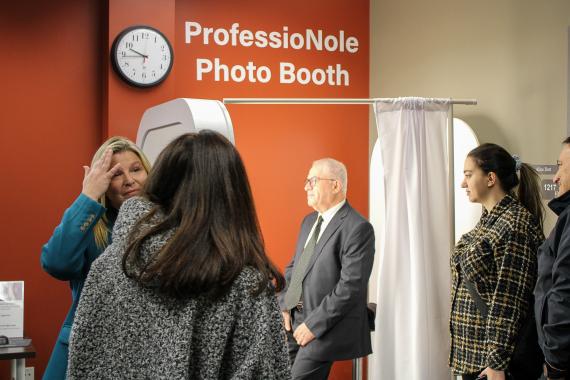
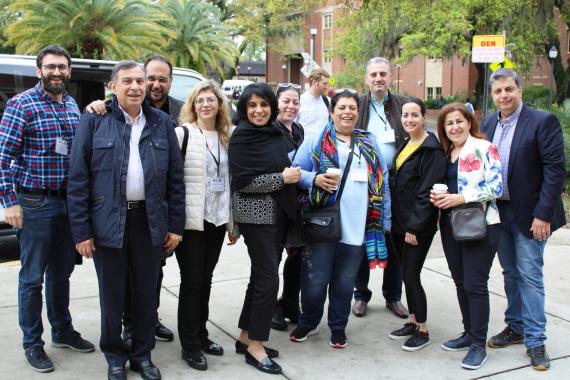
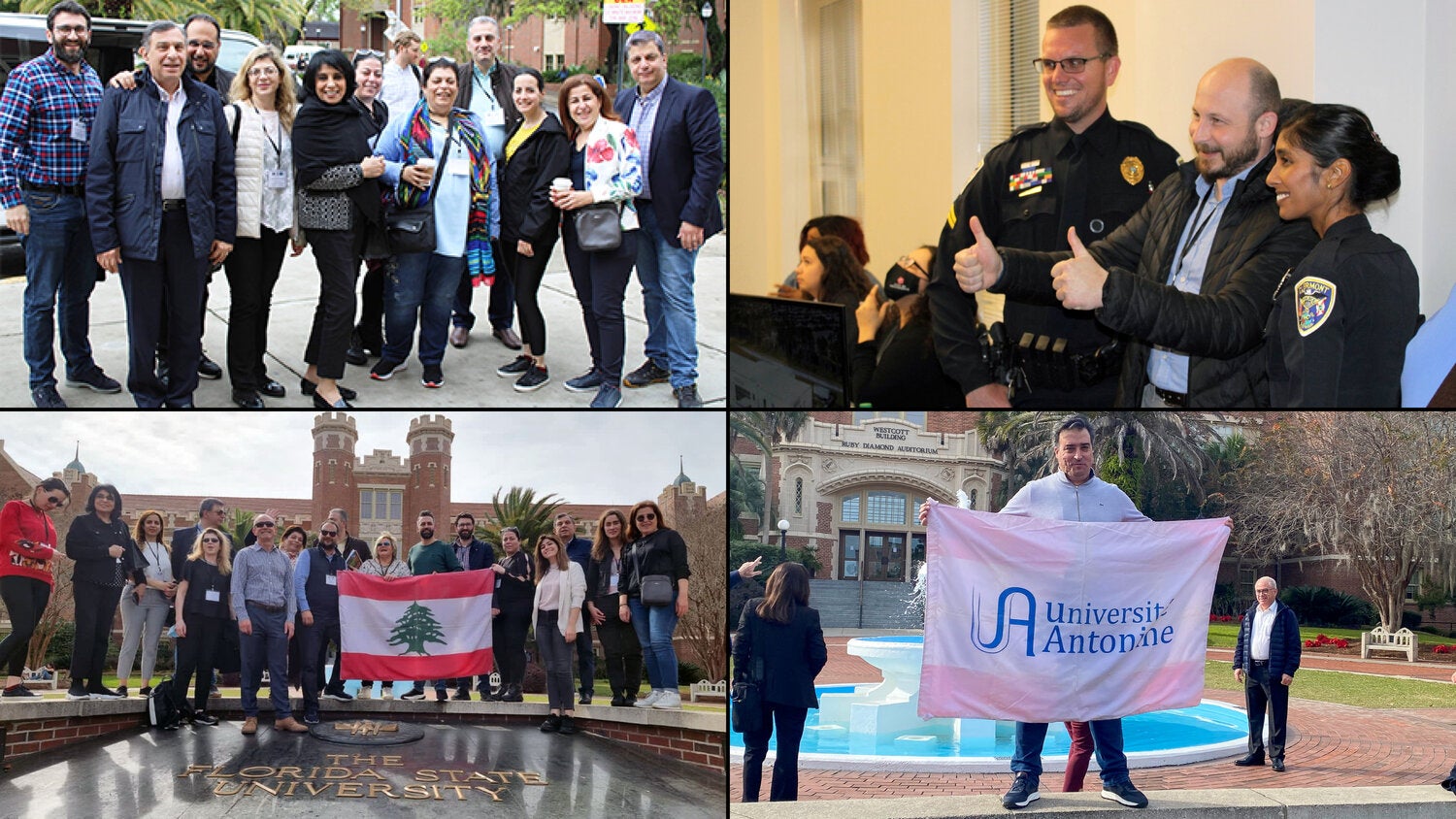
This year LSI continued its partnership with the USAID/Lebanon Higher Education Capacity Development (HECD) Program by welcoming 19 university staff members from Lebanon to Tallahassee. The group spent five days focusing on career development programs, with much of the program hosted by The Career Center at FSU. LSI trained administrators and faculty from 10 Lebanese universities participating in the program. They were provided training and support on building career centers, grant proposal writing and infrastructure setup, design thinking, and other areas.
2023 Update
LSI continued its partnership with the USAID/ Lebanon Higher Education Capacity Development Program by welcoming 19 university staff members from Lebanon to Tallahassee. The group spent five days focusing on career development programs, with much of the program hosted by The Career Center at FSU. LSI trained administrators and faculty from 10 Lebanese universities participating in the program. They were provided training and support on building career centers, grant proposal writing and infrastructure setup, design thinking, and other areas.
2024 Update
LSI continued its partnership with the USAID/ Lebanon Higher Education Capacity Development Program by welcoming two groups to Tallahassee in December. Both groups were comprised of nine Lebanese administrators representing each of the nine HECD partner universities. One study tour focused on employer engagement and the other focused on alumni tracking. This was the fifth year of the partnership and dozens of administrators and faculty from Lebanese universities have been trained by LSI and FSU’s Career Center.
2025 Update
Since 2019, LSI has been an implementing partner of the Higher Education Capacity Development (HECD) Program. The program aimed to build the institutional capacity of 10 universities in Lebanon, equipping students with the skills needed to succeed in local and international job markets. The multi-year project was in partnership with the Education Development Center (EDC). The HECD program, which ran from 2019-2025, produced tangible results. HECD's cornerstone job readiness course package equipped 19,663 students with job readiness skills and trained 210 instructors across 10 universities to deliver critical job readiness and employability skills. Of the nearly 20,000 students HECD worked with, 56% were female. HECD also strengthened the institutional capacity of Higher Education Institutions (HEIs) by providing targeted training and coaching sessions across several project interventions to more than 1,600 staff. Thanks to the HECD project, more than 200 job readiness trainers were certified. Additionally, 30 HEI staff members participated in international study tours at FSU, ten HEI staff members gained global experience, nine campus career centers in Lebanon were upgraded, and 500 students received financial assistance. As a result of these efforts, HECD contributed to the establishment of Lebanon's first nationwide career center consortium. The program's success was measured not only by the number of touch points with students and teachers in Lebanon, but also by measurable improvements in employer engagement, grant writing, data-driven decision-making, career centers, and job readiness programs. In 2020, baseline assessments revealed that all partner HEIs measured Level 1 and 2 capacities across the project's five key capacity categories. By 2024, targeted HECD training interventions and capacity building efforts had successfully advanced all HEI partners to Levels 3 or 4, demonstrating substantial growth in institutional capacity.