
Robert C. Schoen, Ph.D.
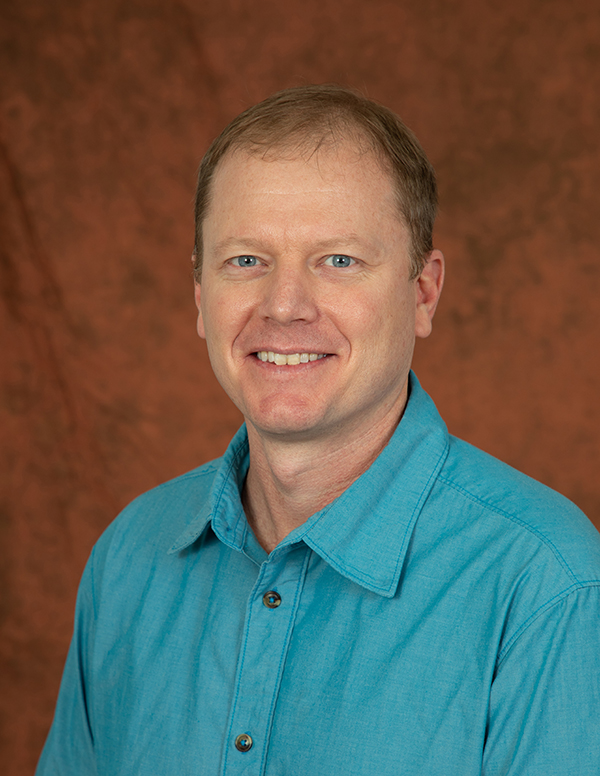
Robert C. Schoen, Ph.D.
Ph.D., Mathematics Education, Florida State University, 2010
M.S., Mathematics Education, Florida State University, 2006
B.S., Atmospheric Science, Mathematics, University of North Carolina—Asheville, 2003
Curriculum Vitae
Learn More About Rob Schoen
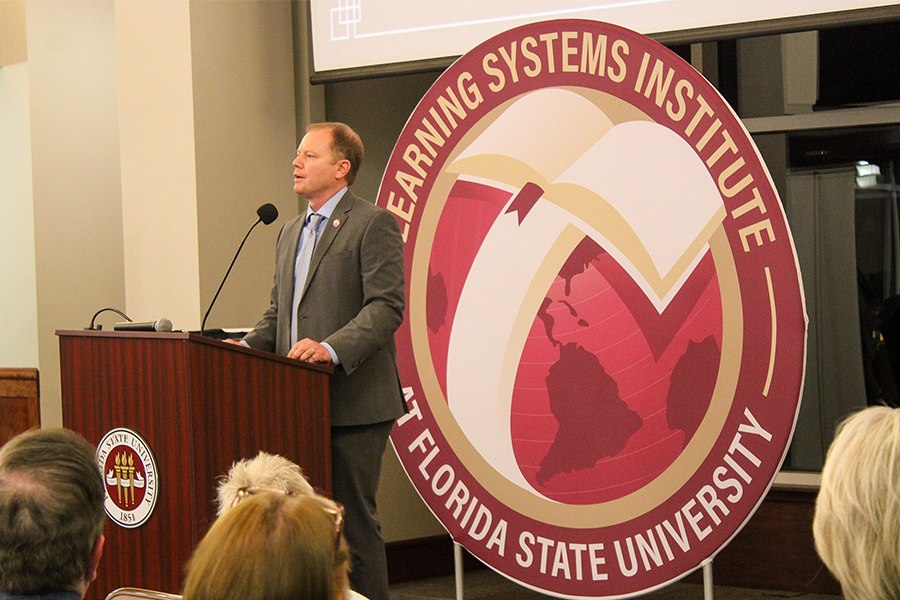
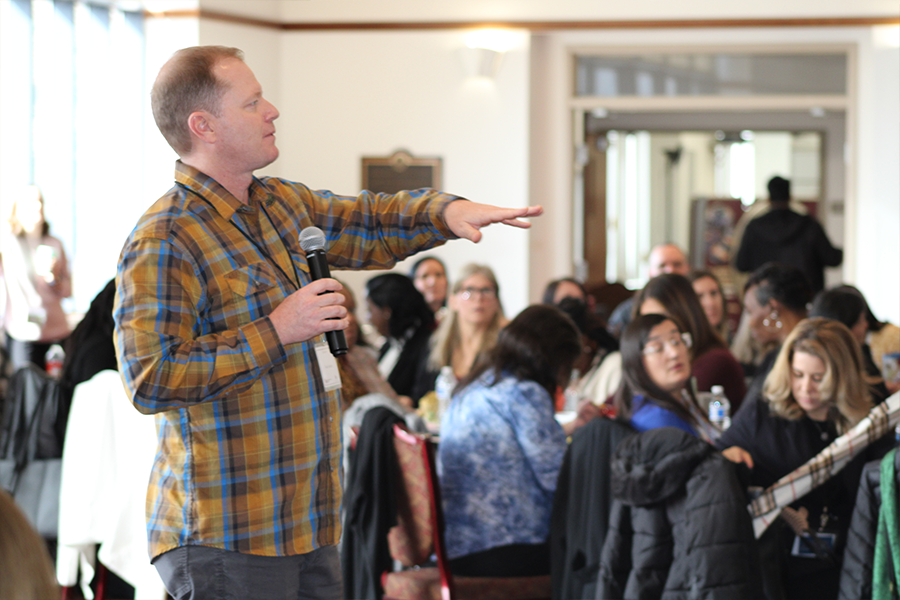
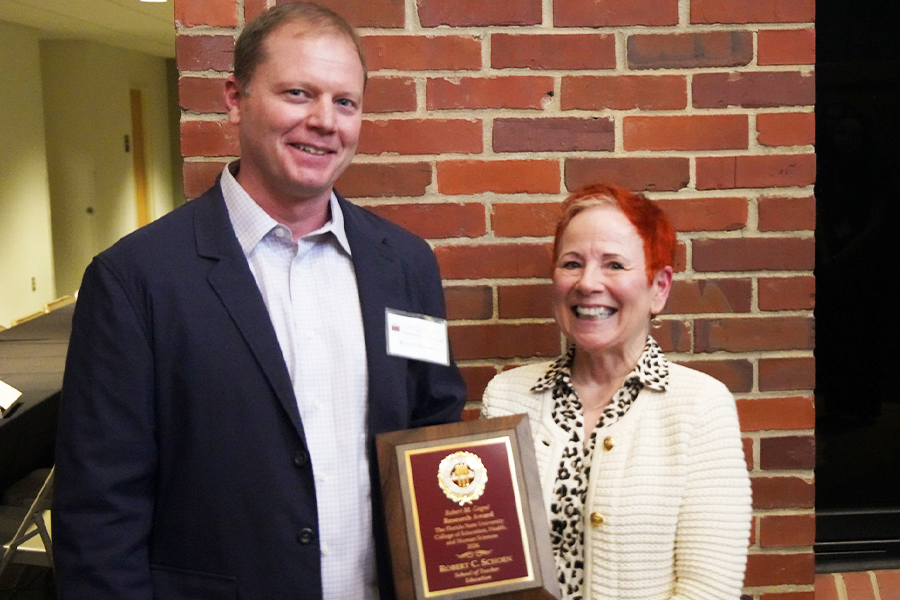
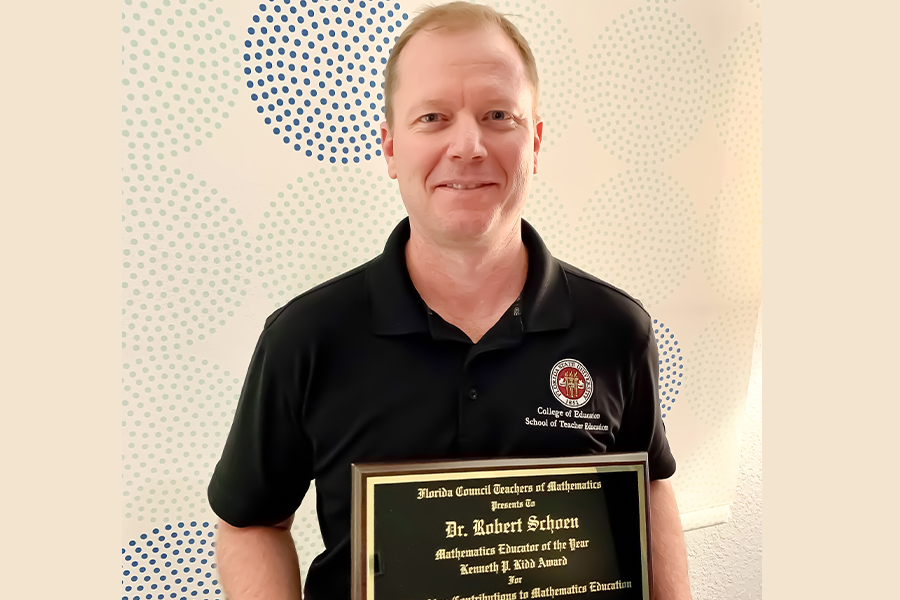
Robert C. Schoen, Ph.D., is the Associate Director of LSI’s Florida Center for Research in STEM (FCR–STEM) and an associate professor of mathematics education in the School of Teacher Education. Through his research, he seeks answers to the question, “How can we improve mathematics teaching and learning for all students?” In search of answers, he has designed and directed more than one-dozen large-scale, randomized-controlled trials of educational interventions designed to improve teaching and learning in mathematics. Most of those interventions focus on the role of the teacher by means of increasing teachers’ professional capacity.
His research experience extends from the development of educational and psychological measurement instruments and in-depth study of student mathematical thinking to the mathematical education of teachers and rigorous evaluation of the effectiveness of educational interventions. Through his extensive research and outreach, Dr. Schoen has developed and sustained collaborative professional relationships with principals, teachers and district staff and has gained valuable insights into program development, implementation, educational measurement, and evaluation of educational interventions in varying local contexts.
Dr. Schoen promotes a scientific approach to educational research and supports the use of open science and experimental design in his work. His work includes reports of the impact of educational interventions on student learning in mathematics and statistics through various teacher learning programs involving formative assessment, Cognitively Guided Instruction (1, 2, 3), lesson study, and statistics curriculum and professional learning opportunities.
Through these research activities, Dr. Schoen has engaged in development and validation of several original assessment instruments for use in mathematics education research and evaluation, including the Beliefs about Mathematics Teaching and Learning (B-MTL) questionnaire and several forms of the Knowledge for Teaching Early Elementary Mathematics (K-TEEM) test, the Teacher Ability to Predict Student Success (TAPSS) assessment, the Math Anxiety Scale for Teachers (MAST), the Elementary Mathematics Student Assessment (EMSA) for grades K–5 students, and the Mathematics Performance and Cognition (MPAC) interview.
Dr. Schoen’s research has been supported by the Helios Education Foundation, the Florida Department of Education, and the U. S. Department of Education’s Effective Educator Development (EED) program and Institute of Education Sciences (IES). His writing has been published in national and international peer-reviewed journals, including the Journal for Research in Mathematics Education, The Elementary School Journal, For the Learning of Mathematics, AERA Open, Cogent Education Open Access, Teaching Children Mathematics, the International Journal for Technology in Mathematics Education, Journal of Experimental Education, and Mathematics Teaching in the Middle School. He has also published many research reports, white papers, and working papers that are made available through Diginole, FSU’s Research Repository.
Projects
Integrated Data for Education AI, and Learning in Mathematics Project (IDEAL-Math) Network, National Science Foundation.
Florida State University psychologists, education researchers and computational scientists have teamed up to transform raw data from educational research into a digital resource that can advance the teaching and learning of K-12 mathematics. The team was awarded $1.5 million from the National Science Foundation (NSF) to support the creation of the Integrated Data for Education AI, and Learning in Mathematics Project (IDEAL-Math) Network.
Foundations for Success: Developing Effective Mathematics Educators through Cognitively Guided Instruction
The Foundations for Success project will enhance elementary mathematics teacher effectiveness through large-scale implementation of an evidence-based, mathematics teacher professional-development program called Cognitively Guided Instruction (CGI).
Supporting Teacher Enactment of the Probability and Statistics Standards (STEPSS)–Replication
Designed to be a replication study, this project will use a randomized controlled trial to evaluate the implementation and impact of a curriculum replacement unit designed to support teaching and learning of seventh-grade statistics and probability.
Supporting Teacher Enactment of the Probability and Statistics Standards (STEPSS)
This applied research study will evaluate the impact of curriculum materials and a related professional development program designed to support teaching and learning in statistics and probability at the seventh-grade level.
Follow Up to the Replicating the CGI Experiment in Diverse Environments Study
This study is a follow up to an efficacy trial of a multiyear professional-development intervention for elementary mathematics teachers based on Cognitively Guided Instruction (CGI). Grade 1 and 2 teachers and their students across 22 schools participated in a cluster-randomized controlled trial of a CGI-based teacher professional development intervention during the 2013–14 and 2014–15 school years. The follow-up study will explore the extent to which opportunity for teacher involvement in CGI professional development in a given school had a causal effect on student achievement.
Examining Teacher Math Anxiety as a Malleable Factor Related to Student Outcomes
This project examines teacher characteristics, including mathematical knowledge for teaching and beliefs about mathematics teaching and learning, in order to identify the most important teacher factors for student learning in mathematics. This project was funded through the Institute of Education Sciences, U.S. Department of Education.
Improvement of Elementary Fractions Instruction: Randomized Controlled Trial Using Lesson Study with a Fractions Resource Kit
This project is a multisite cluster-randomized trial evaluation design involving four different treatment conditions: Lesson study with fractions resource kits, lesson study without fractions resource kits, individual study of fractions resources without lesson study, and no-lesson study on fractions with business-as-usual fractions instruction. The project will result in evaluation reports concerning the impact and implementation of lesson study with fractions resource kits.
FCR-STEMLearn: Foundations for Success in STEM
This project provides professional development for elementary teachers in 17 Florida school districts. Early elementary teachers participate in a program called Cognitively Guided Instruction (CGI). Upper elementary teachers participate in a program called Extending Children’s Mathematics (ECM). Under the direction of Linda Levi, the CGI and ECM components are led by workshop leaders from Teachers Development Group. Members of the Schoen research lab facilitate weekly, school-based FACT team meetings for some of the teachers in the CGI program. Project evaluation includes a multisite cluster-randomized trial evaluation of the impact of the CGI program on student achievement and a separate multisite cluster-randomized trial of the ECM program on student achievement.
Replicating the CGI Experiment in Diverse Environments
This project is a third-party evaluation of a multiyear teacher professional development program for early elementary teachers called Cognitively Guided Instruction (CGI). Using a multisite cluster-randomized trial evaluation design, the project will result in evaluation reports concerning the impact and implementation of the CGI program. Several measurement instruments used in this project were developed by the Schoen research lab, including a beginning of year student pretests, an end-of-year student interview (MPAC), a measure of teacher knowledge (K-TEEM), and a measure of teacher beliefs (B-MTL).
Mathematics Formative Assessment System (MFAS)
MFAS was a multiyear, multiphase project involving development of tasks and rubrics designed for teachers to use during classroom instruction for the purpose of supporting formative assessment. Mathematics tasks were aligned with and based on the Next Generation Sunshine State Standards in mathematics, the Common Core State Standards in mathematics, and the Mathematics Florida Standards. The tasks and rubrics are available through CPALMS. Three successive research studies involving randomized-controlled trial designs were conducted: a 9-week pilot study involving kindergarten through third-grade, a one-semester study involving second-and third-grade, and a one-year study involving kindergarten and first-grade teachers and students.
Integrating STEM: Mathematics, Science, and Computing
This two-year project involved sustained professional development for middle-grades mathematics and science teachers in all of the middle schools in Citrus County, Florida. The project involved integration of mathematics and science through mathematical modeling using computer software (i.e., Excel, GeoGebra) and focused on the topic of water resource management.
FCR-STEMLearn: Summer 2014 Institute for Early Secondary Statistics and Probability
This project provided a two-week (11 day) summer institute for 74 secondary-level teachers representing 35 public school districts in Florida. The summer institute was based on two previously designed and implemented professional-development programs developed and delivered by Schoen and colleagues. The summer 2014 institute contained two primary components: content-focused teacher professional development, and development of participant-generated curriculum materials designed to implement the statistics and probability standards. The three concurrent sessions of the summer 2014 statistics institute were delivered by fifteen individuals, working in teams of five, comprised of a university professor in the mathematical sciences, high-school statistics teachers, and curriculum-development experts. Program evaluation used a randomized-controlled trial involving assignment of 180 teachers to the treatment or control condition. The primary outcome of interest in the program evaluation was the short-term and long-term impact on teacher knowledge in statistics and probability.
Leadership for Mathematics and Science Instruction
This project involved more than 600 school principals and teacher leaders in eight days of professional development per year. The professional development program focused on improving capacity for instructional leadership in mathematics and science at the elementary and secondary levels. This project was awarded through multiple grants from the Florida Department of Education, one of which was through the U.S. Department of Education’s Mathematics and Science Partnership program.
Publications
Schoen, R. C, Whitacre, I., & Champagne, Z. (2023). Word problem performance of U.S. first graders in the 20th century and Common Core era. Journal for Research in Mathematics Education, 54(1), 24–42.
Schoen, R. C., Lewis, C. C., Rhoads, C., Lai, K., & Riddell, C. M. (2023). Impact of lesson study and fractions resources on third- and fourth-grade classroom instruction and student learning in fractions. Journal of Experimental Education. http://dx.doi.org/10.1080/00220973.2023.2183374
Schoen, R. C, Whitacre, I., & Champagne, Z. (2023). Word problem performance of U.S. first graders in the 20th century and Common Core era. Journal for Research in Mathematics Education, 54(1), 24–42. https://doi.org/10.5951/jresematheduc-2020-0201
Guven, A., Solmaz, G., & Schoen, R.C. (2022, November 17–20). Structural validity of 2021 Knowledge for Teaching Early Elementary Mathematics (K-TEEM): A psychometric study. Paper presented at the North American Chapter of the International Group for the Psychology of Mathematics Education 44th Annual Meeting, Nashville, TN.
Ran, H., Secada, W. G., Rhoads, C. H., Schoen, R. C., Tazaz, A. M., & Liu, X. (2022, April 21–26). The long-term effects of Cognitively Guided Instruction on elementary students’ mathematics achievement. Paper presented at the Annual Meeting of the American Educational Research Association, San Diego, CA.
Schoen, R. C., Bray, W.S., Tazaz, A. M., & Buntin, C. K. (2022). A description of the Cognitively Guided Instruction professional development program in Florida: 2013–2020. Florida State University. https://doi.org/10.33009/fsu.1643828800
Schoen, R. C., Rhoads, C., Perez, A. L., Tazaz, A. M., & Secada, W. G. (2022). Impact of Cognitively Guided Instruction on Elementary School Mathematics Achievement: Five Years after the Initial Opportunity. Florida State University. [Working paper.] https://doi.org/10.33009/fsu.1653430141
Schoen, R. C., Rhoads, C., Tazaz, A. M., Secada, W. G., & Stone, A. (2021, September 26–29). Impact of Cognitively Guided Instruction on elementary school math achievement: Five years after the initial opportunity. Paper presented at the annual conference of the Society for Research in Educational Effectiveness. [Conference held virtually.]
Farfan, G., & Schoen, R. C. (2021). Elementary students’ understanding of the equals symbol: Do Florida students outperform their peers? Dimensions in Mathematics, 41(1), 27–38. https://www.schoenresearch.com/wp-content/uploads/2021/05/Equals-symbol_Dimensions-Spring-2021.pdf
Schoen, R. C., Champagne, Z., Whitacre, I., & McCrackin, S. (2021). Comparing the number and distribution of additive word problems in first-grade U.S. textbooks in the 1980s and the Common Core era. School Science and Mathematics, 121(2), 110–121. https://doi.org/10.1111/ssm.12447
Schoen, R. C., Li, L., Yang, X., Guven, A., & Riddell, C. (2021, September 26–29). Using a many-facet Rasch model to gain insight into measurement of instructional practice in mathematics. Paper presented at the annual conference of the Society for Research in Educational Effectiveness. [Conference held virtually.]
Schoen, R.C., Yang, X., & Solmaz, G. (2021). Psychometric Report for the 2019 Knowledge for Teaching Early Elementary Mathematics (K-TEEM) Test (Research Report No. 2021-04). Florida State University. https://doi.org/10.33009/lsi.1620243057
Schoen, R. C., & Koon, S. (2021). Effects of an inquiry-oriented curriculum and professional development program on grade 7 students’ understanding of statistics and on statistics instruction (REL 2021–055). U.S. Department of Education, Institute of Education Sciences, National Center for Education Evaluation and Regional Assistance, Regional Educational Laboratory Southeast. https://nces.ed.gov/pubsearch/pubsinfo.asp?pubid=REL2021055
Schoen, R. C., LaVenia, M., Tazaz, A., Farina, K., Dixon, J. K., & Secada, W. G. (2020). Replicating the CGI experiment in diverse environments: Effects on grade 1 and 2 student mathematics achievement in the first program year (Research Report No. 2020–02). Florida State University. https://doi.org/10.33009/fsu.1601237075
Sahin, N., Dixon, J., & Schoen, R. C. (2020). Investigating the association between students’ strategy use and mathematics achievement. School Science and Mathematics, 120(6), 325–332. http://dx.doi.org/10.1111/ssm.12424
Schoen, R. C., LaVenia, M., Chicken, E., Razzouk, R., & Kisa, Z. (2019). Increasing secondary-level teachers’ knowledge in statistics and probability: Results from a randomized controlled trial of a professional development program. Cogent Education OA, 6(1), 1613799. https:/www.doi.org/10.1080/2331186X.2019.1613799
Ganley, C. M., Schoen, R. C., LaVenia, M., Tazaz, A. (2019). Construct validation of the Math Anxiety Scale for Teachers. AERA Open, 5(1), 1–16. https://doi.org/10.1177/2332858419839702
Bray, W., Johnson, J., Rivera, N., Fink, L-A., Bauduin, C., & Schoen, R. C. (2019). Unlocking mathematical understanding together through FACT meetings. Teaching Children Mathematics, 25(6), 370–377.
Schoen, R. C., & LaVenia, M. (2019). Teacher beliefs about mathematics teaching and learning: Identifying and clarifying three constructs. Cogent Education OA, 6(1). https://doi.org/10.1080/2331186X.2019.1599488
Schoen, R. C., LaVenia, M., & Tazaz, A. M. (2019, April). Effects of a CGI program on grades 3–5 students: A multisite cluster-randomized trial. Paper presented at the annual meeting of the American Educational Research Association, Toronto, Ontario.
Boggs, G. L., Whitacre, I., Schellinger, J., Champagne, Z., & Schoen, R. C. (2018). Contextual meanings of the equals sign as conceptual blends. For the Learning of Mathematics, 38(2), 34–39.
Schoen, R. C., LaVenia, M., & Tazaz, A. M. (2018). Effects of the first year of a three-year CGI teacher professional development program on grades 3–5 student achievement: A multisite cluster-randomized trial (Research Report No. 2018-25). Florida State University. http://doi.org/10.33009/fsu.1562595733
Schoen, R. C., Anderson, D., & Bauduin, C. (2018). Elementary Mathematics Student Assessment: Measuring grade 3, 4, and 5 students’ performance in number (whole numbers and fractions), operations, and algebraic thinking in spring 2016. (Research Report No. 2018-26). Florida State University. https://doi.org/10.33009/fsu.1653497279
Schoen, R. C., Bray, W., Wolfe, C., Nielsen, L., & Tazaz, A. M. (2017). Developing an assessment instrument to measure early elementary teachers’ mathematical knowledge for teaching. The Elementary School Journal, 118(1), 55–81. https://doi.org/10.1086/692912
Whitacre, I., Schoen, R. C., Champagne, Z. M., & Goddard, A. (2016). Relational thinking: What’s the difference? Teaching Children Mathematics, 23(5), 303–308. https://doi.org/10.5951/teacchilmath.23.5.0302
Champagne, Z., Schoen, R. C., & Riddell, C. (2014). Variations in Both Addends Unknown problems. Teaching Children Mathematics, 21(2), 114–121.
Haciomeroglu, E.S., Bu, L., Schoen, R.C., & Hohenwarter, M. (2011). Prospective teachers’ experiences in developing lessons with dynamic mathematics software. International Journal for Technology in Mathematics Education, 18(2), 71–82.
Schoen, R.C., Erbilgin, E., & Haciomeroglu, E.S. (2011). Analyzing the Next Generation Sunshine State Standards for mathematics: Is the state curriculum still a mile wide and an inch deep? Dimensions in Mathematics, 31(1), 30–39.
Haciomeroglu, E.S., & Schoen, R.C. (2009). What does it mean to teach mathematics “in depth”? Dimensions in Mathematics, 29(2), 20–24.
Haciomeroglu, E.S., Bu, L., Schoen, R.C., & Hohenwarter, M. (2009). Learning to develop mathematics lessons with GeoGebra. MSOR Connections, 9(2), 26–28.
Haciomeroglu, E.S. & Schoen, R.C. (2008). Mathematical continuity: Identifying, exposing, and closing the gaps of understanding. Dimensions in Mathematics, 28(1), 9–12.
Fernández, M.L., Schoen, R.C. (2008). Teaching and learning mathematics through hurricane tracking. Mathematics Teaching in the Middle School, 13(9), 500–512.
Schoen, R.C. & Clark, J.T. (2007). Florida’s answer to “A Mile Wide and an Inch Deep:” Mathematics content standards that allow time for in-depth teaching and learning. Dimensions in Mathematics, 27(2), 6–12.