
LSI Senior Research Associate Shares Her Passion for Geosciences with Big Bend Teenagers
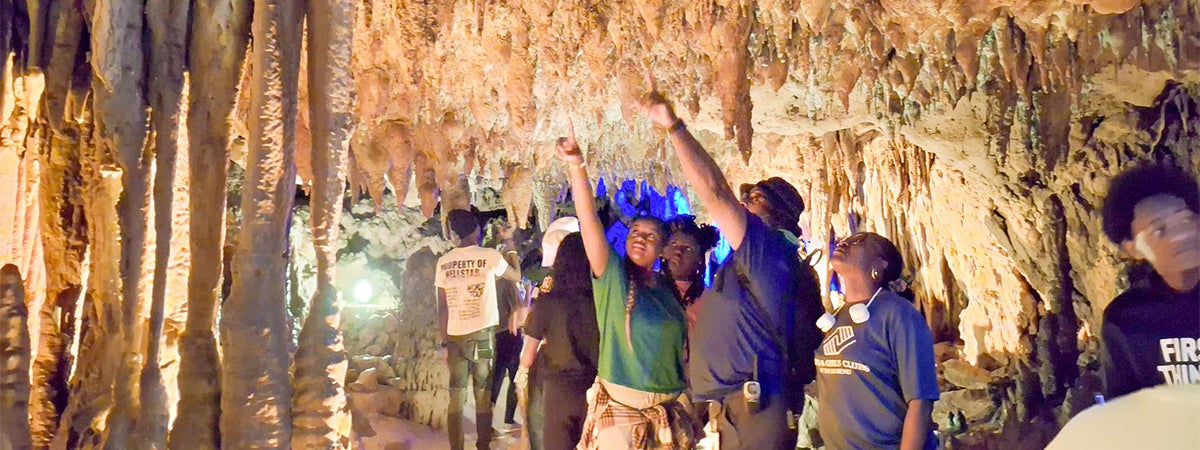
Tallahassee, FL – Learning Systems Institute (LSI) senior research associate Dr. Amanda Tazaz hosted the third geoscience summer camp in the Big Bend region as part of the Bridging the Gap into the Geosciences Summer Camp program.
Teenagers from the FAMU DRS Club and the Miccosukee Club of the Boys & Girls Clubs of the Big Bend participated in the free program. This immersive geoscience summer camp program introduced students to geoscience through firsthand investigations, field experiences, conversations with geoscientists and opportunities to see geoscience in action across North Florida. Students spent part of their summer exploring science beneath their feet and the natural systems that shape Florida’s landscape.
For Tazaz, the program represents much more than an opportunity to teach students about geoscience. It is part of a personal commitment to making meaningful science experiences accessible to young people, especially students who may not otherwise have the opportunity to participate.
"Through our local partnerships, we are excited to tackle the pressing concerns many geoscientists have raised regarding the issue of limited awareness, access and opportunity to participate in meaningful geoscience experiences before college," said Tazaz. "By introducing historically underrepresented pre-college students to the world of geoscience at a crucial time in their lives, we hope to inspire a new generation of geoscientists from diverse backgrounds. This initiative could be key to unlocking the full potential of underrepresented populations in geoscience. It may lead to exciting discoveries that benefit us all. Join us in this exciting endeavor and let's create a brighter future together."
An informal ocean science experience as a teenager shaped Tazaz’s own path to a career in science. That early opportunity let her experience science beyond the traditional classroom and sparked an interest that would eventually lead her to pursue a degree in oceanography.
Today, Tazaz is passionate about creating those same kinds of transformative opportunities for the next generation.
“I recognize that access to high-quality science experiences can sometimes depend on a student’s financial resources,” said Tazaz. “Summer camps, field programs, travel and other informal learning experiences can be difficult for families to afford, even when students are eager to participate.”
The Bridging the Gap into the Geoscience summer camp experience was created by Tazaz in part to help change that. Tazaz’s vision is to ensure that more teens, including those who may not have the financial means to participate in traditional geoscience enrichment programs, have the opportunity to discover geoscience through authentic, hands-on experiences.
“Science can change the trajectory of a student’s life when they have the opportunity to experience it,” said Tazaz. “By bringing geoscience experiences directly to students through a partnership with the Boys & Girls Clubs of the Big Bend, we are helping remove some of the barriers that can prevent young people from seeing themselves as future scientists.”
Throughout the summer, students explored the science that makes Florida unique. They learned about Florida’s karst aquifer system, investigated how water moves through porous and permeable rock and how groundwater connects Florida’s communities, springs, rivers, and coastal environments. The teens explored caves and sinkholes and learned why Florida’s geology makes groundwater resources both incredibly important and particularly vulnerable.
The program also introduced students to natural hazards, including hurricanes, flooding and severe storms. It helped them understand how geoscientists contribute to the way communities prepare for and respond to these events.
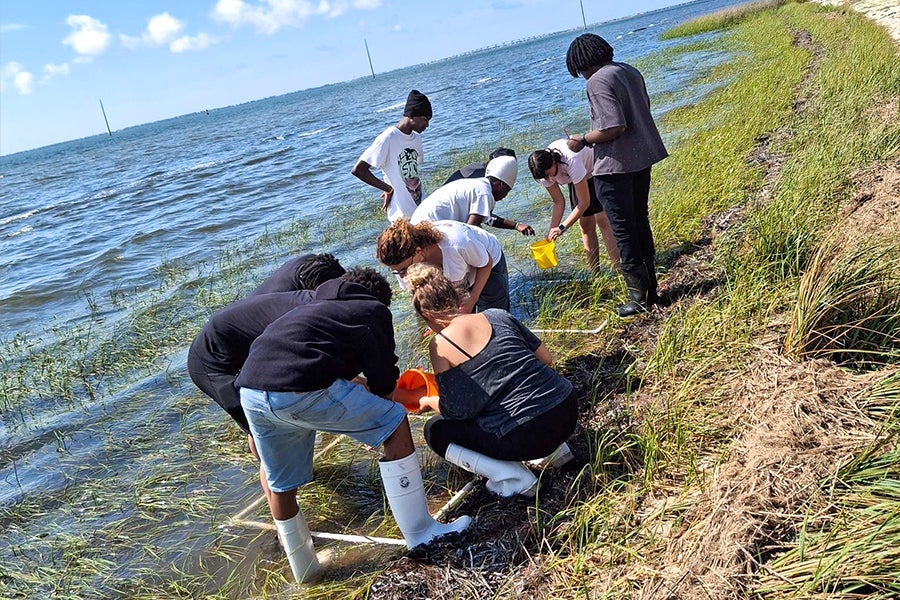
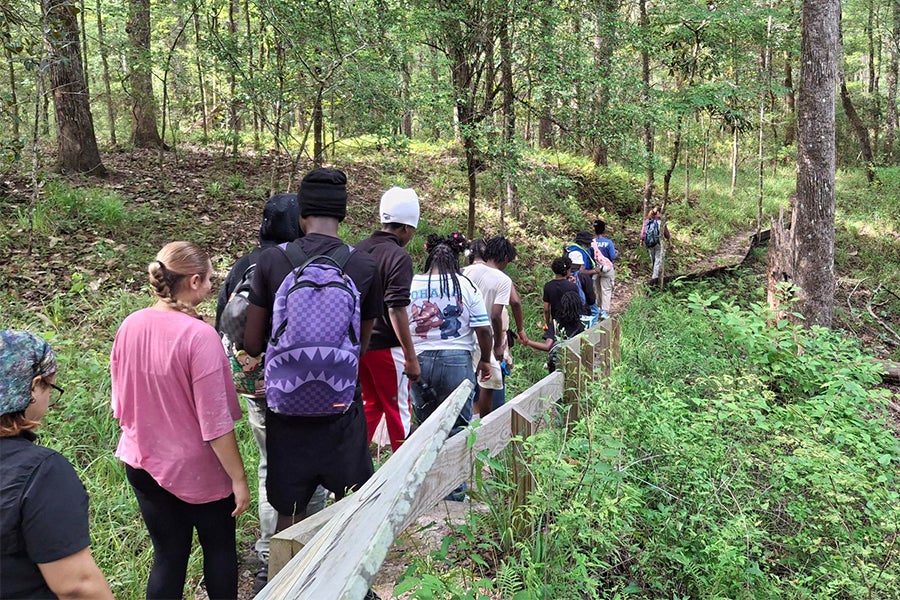
Field experiences allowed students to see these concepts firsthand. Visits to Florida Caverns State Park, Leon Sinks and Edward Ball Wakulla Springs State Park allowed students to see Florida’s geology and groundwater systems in action. At the coast, students visited the Apalachicola National Estuarine Research Reserve, explored coastal ecosystems and learned how approaches such as living shorelines and oyster reef restoration can help protect communities while supporting healthy marine habitats.
“These experiences helped transform abstract scientific concepts into something students could see, touch, question and remember,” said Tazaz.
Students also had the opportunity to interact with geoscience professionals. They learned from members of the Florida Geological Survey, gaining insight into Florida’s geology and the work of professional geologists and staff at the Apalachicola National Estuarine Research Reserve, where they were introduced to coastal and estuarine science and the importance of understanding and protecting these dynamic environments.
The team at the FSU Coastal and Marine Laboratory created meaningful experiences for students as they explored coastal and marine science. Students engaged in a direct activity that demonstrated what sample collection and processing look like in the field.
Through these interactions, students discovered that geoscience is not simply a subject studied in school. It is a profession that takes scientists into the field, into boats, into caves, along coastlines and into communities to address some of the most important environmental challenges facing Florida.
The program also benefited from a partnership with Conservation Pathways, a local nonprofit organization that brought its summer interns into the program to collaborate with the students.
Their interns served as near-peer mentors, helping students engage with activities and explore environmental science from the perspective of young people who are themselves gaining experience in the field. The teens also transformed their summer experiences into art, using natural materials to create unique pieces that reflected what they discovered, explored and experienced throughout the program.
“These relationships are an important part of creating a sense of belonging in science,” said Tazaz. “Seeing someone closer to their own age pursuing opportunities in geoscience or finding creative ways to connect with the natural world can help students begin to imagine those possibilities for themselves.”
Through Bridging the Gap into the Geosciences, Tazaz brought together educators, scientists, conservation professionals, state agencies, parks and community organizations to create an experience students might not otherwise have had access to, resulting in a program filled with exploration, discovery, mentorship and inspiration.
“Sometimes, all it takes is one opportunity to see science differently and a group of people who believe that every student deserves the chance to have that opportunity,” said Tazaz.
ABOUT LSI
LSI strives to lead the way in creating innovative educational solutions that seamlessly connect theory with practice. Through advanced research, we develop industry-leading methods and implementation strategies to enhance systematic learning at all levels and in all environments. For more than five decades, LSI has been committed to driving measurable improvements in the performance of both individuals and organizations.