
LSI Researchers Conduct First-Ever Study of Large-Class Pedagogy in Sub-Saharan Africa Utilizing Video and Behavioral Observation Software
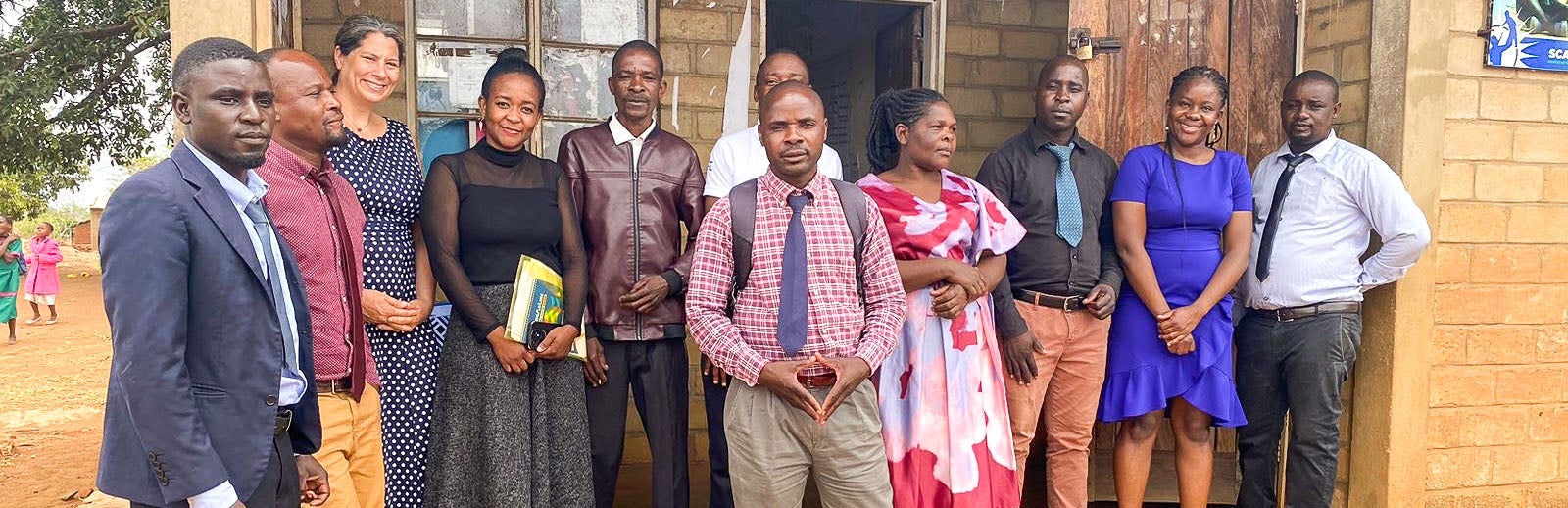
Tallahassee, Fla. – In 1994, Malawi was an early adopter of a policy introducing free primary education across sub-Saharan Africa. The policy opened the doors for unmatched opportunities for children across sub-Saharan Africa but also led to major challenges. One of which was equipping teachers to teach classes of up to 300 students.
Researchers at the Learning Systems Institute (LSI) began looking for solutions to this problem in 2022 and continued their work last year with a grant from the FSU Council on Research and Creativity. During this period, LSI staff began work on a first-ever behavioral analysis study that utilized video recordings of classrooms that were then analyzed with Observer XT software developed by Noldus IT.
“Across the globe, there is a research gap on best practices for large classes,” said Principal Investigator Dr. Adrienne Barnes-Story. “The evidence in prior research was limited to just qualitative and observational research. I am proud that we are the first researchers to go into these classrooms and video record and then use the Observer XT behavioral observation software to critically analyze what is going on in those classrooms,”
 Teachers in Malawi are struggling to implement learner-centered pedagogies in classrooms with 100, 200, or even 300 students.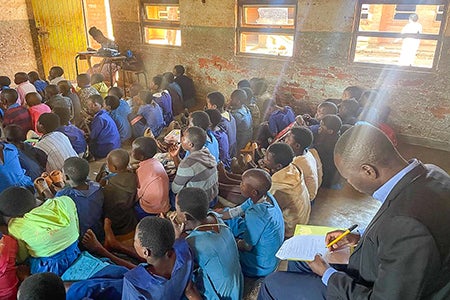
The evidence in prior research of large-class pedagogy was limited to just qualitative and observational research.
Barnes-Story and her team observed pedagogical practices across 19 Malawian schools and 47 primary classrooms where teachers were tasked with instructing 80 or more learners. All the videos were transcribed in Chichewa and translated into English, allowing the researchers to match what was said with the observed behaviors.
During their study, researchers found that teachers often use whole-class instruction, frequent prompting and call-and-response techniques rather than group work, pair work and peer-to-peer engagement. When managing their classrooms, teachers relied on monitoring learners, peer monitoring and proximity. Positive narration, using learners' names and routines was less frequent. There was little feedback for learners and most of that feedback focused on the children with the right answers. When children get a question wrong, teachers often move on to the next student without providing feedback.
“We found that teachers often missed opportunities to turn a learning moment into a teachable moment to improve student performance,” said Barnes-Story. “Across 47 lessons, there were only three instances in which a child asked a teacher a question, and the teacher answered it. We did not observe learners asking questions.”
After studying the videos and speaking with administrators and teachers, the practices observed in the classrooms aligned with ideal practices regarding teacher proximity to students and support for classroom management. The major gaps observed were in collaborative learning and differentiating instruction and assessment.
“Our observations were that what the teachers say they want to do and what they actually do are quite different,” said Barnes-Story. “The teachers are struggling to implement learner-centered pedagogies in these classrooms with 100, 200, or even 300 students. There is a lack of resources and the teachers are also asked to keep daily assessment records on all the learners for every lesson, which is nearly impossible.”
Due to numerous limitations, researchers found that teachers adopted a highly structured, teacher-directed approach, with limited opportunities for peer collaboration and diverse assessment methods. This is a result of having to move through the curriculum at a required pace that limits their ability to give feedback, differentiate learning levels among the students or conduct hands-on activities.
After conducting focus groups, interviews and classroom observations, researchers concluded that teachers and administrators in Malawi have identified effective practices for teaching large classes and assessing learning. Still, they are unable to apply those strategies in large classes.
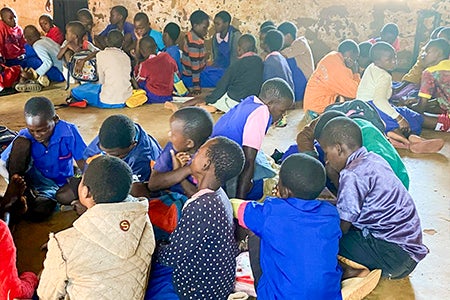
During their study, researchers found that teachers often use whole-class instruction, frequent prompting and call-and-response techniques rather than group work, pair work and peer-to-peer engagement.
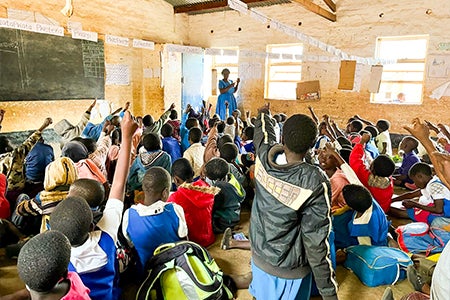
Across 47 lessons, researchers cited only three instances in which a child asked a teacher a question, and the teacher answered it. They did not observe learners asking questions.
“Teachers in Malawi believe in the correct pedagogies,” said Barnes-Story. “The issue is they are unable to apply them because of the class sizes and the resource constraints. The positive takeaway is that the teachers understand what should be happening.”
Barnes-Story and her team have recommended teacher support and training in class management and instruction. They must also be trained to conduct action research to test the effectiveness of their instructional methods.
“When it comes to training the teachers on action research, there is good news,” said Barnes-Story. “We have spent several years working with teams at the University of Malawi to employ participatory action research. This can be implemented in primary and secondary school classes. I am fully confident that the University of Malawi can support any district or any school to engage their teachers in action research to test the effectiveness of different instructional methods.”
LSI strives to lead the way in creating innovative educational solutions that seamlessly connect theory with practice. Through advanced research, we develop industry-leading methods and implementation strategies to enhance systematic learning at all levels and in all environments. For more than five decades, LSI has been committed to driving measurable improvements in the performance of both individuals and organizations.